lightburn-1-3-01-vollversion

Lightburn-1-3-01-vollversion

: For complex logos or designs, use the Import function to bring in SVG, DXF, or AI files. If importing from Adobe Illustrator, set the DPI to 72 to ensure the scale remains accurate. 3. Organize Layers and Settings

: Manufacturers typically use millimeters (mm). It is recommended to switch your units to mm/min for diode lasers or mm/sec for CO2 lasers. lightburn-1-3-01-vollversion

Creating a project in follows the same core workflow as current versions. Whether you are making a simple name tag or a more complex object, the process involves setting up your workspace, designing your piece, and configuring your laser's cut settings. 1. Set Up Your Workspace : For complex logos or designs, use the

For a detailed step-by-step walkthrough, the LightBurn Documentation provides an excellent guide for creating your first name tag project. Organize Layers and Settings : Manufacturers typically use

: For diode lasers, the origin is usually the bottom-left corner. If your laser has limit switches, enable Auto Home on Startup . 2. Design Your Piece

: Go to the settings and ensure the laser's bed size matches your machine's physical limits.
: For complex logos or designs, use the Import function to bring in SVG, DXF, or AI files. If importing from Adobe Illustrator, set the DPI to 72 to ensure the scale remains accurate. 3. Organize Layers and Settings

: Manufacturers typically use millimeters (mm). It is recommended to switch your units to mm/min for diode lasers or mm/sec for CO2 lasers.

Creating a project in follows the same core workflow as current versions. Whether you are making a simple name tag or a more complex object, the process involves setting up your workspace, designing your piece, and configuring your laser's cut settings. 1. Set Up Your Workspace

For a detailed step-by-step walkthrough, the LightBurn Documentation provides an excellent guide for creating your first name tag project.

: For diode lasers, the origin is usually the bottom-left corner. If your laser has limit switches, enable Auto Home on Startup . 2. Design Your Piece

: Go to the settings and ensure the laser's bed size matches your machine's physical limits.

Weitere Modelle
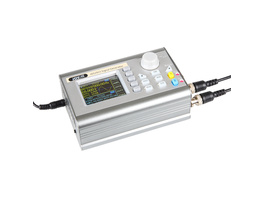
Joy-IT 2-Kanal-Signalgenerator und Frequenzzähler JT-JDS2915
Artikel-Nr. 251094
Der kompakte und mobile Signalgenerator gibt Sinus-, Rechteck-, Dreieck- und Arbiträrsignale im Frequenzbereich bis 15 MHz auf zwei getrennt programmierbaren Kanälen aus und kann als Frequenzzähler bis 100 MHz eingesetzt werden.
sofort versandfertig - Lieferzeit: 1-2 Werktage²
109,00 €
inkl. MwSt.Informationen zu Versandkosten